Gunnison Is Building Hundreds Of New Homes. None Of Them Will Show Up In Your Search.
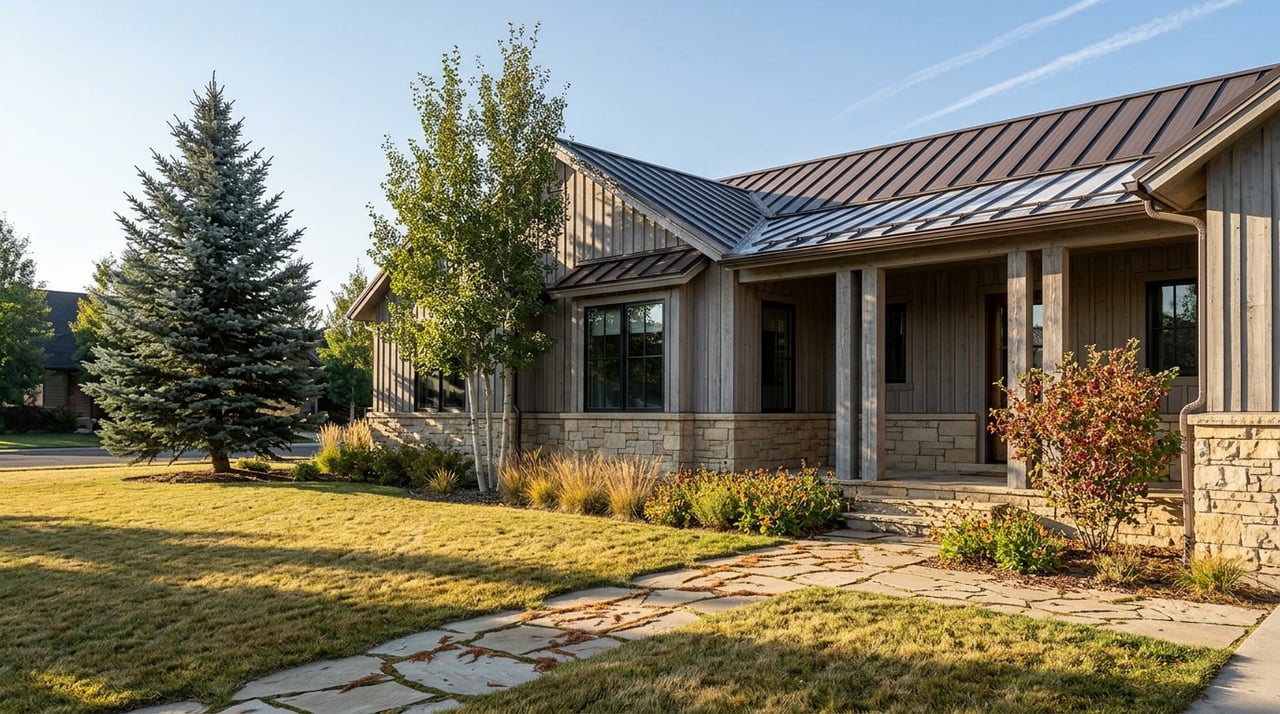
Scroll through listings in Gunnison long enough and you will eventually hit one that looks like a typo. A three-bedroom house priced forty or fifty percent below everything around it, sitting on a normal residential lot, nothing obviously wrong with it. Click in and the listing agent's notes explain why: deed restricted, income qualified, primary residence only, resale price capped by the Gunnison County Housing Authority. The house is real. The price is real. You almost certainly cannot buy it.
That moment captures something worth understanding before you spend more time comparing Gunnison to Crested Butte or Mt. Crested Butte on price alone. The county and its housing authority are in the middle of the largest construction push this valley has seen in years, and a buyer skimming headlines about hundreds of new units could reasonably assume that pipeline will eventually loosen up the market they're shopping in. It won't, because it isn't built to.
Gunnison effectively runs two separate housing markets that happen to share street addresses. One is the market you're used to: homes bought and sold at whatever price a buyer and seller agree to, financed through a normal mortgage, open to anyone who can qualify. The other is a parallel system of income-restricted, deed-controlled housing built or subsidized by the county, aimed specifically at local workers whose income falls inside a defined band.
The two don't compete with each other. A home in the second category can't be bought by just anyone with cash in hand, can't be resold for whatever the market will bear, and in most cases can't be rented short-term at all. Here's roughly how the split works:
| Free-market home | Deed-restricted / workforce home | |
|---|---|---|
| Who can buy or rent | Anyone | Households within a set income band, often required to work locally |
| Price | Set by the market | Capped by a Maximum Sales Price set by the housing authority |
| Resale | Seller's choice, any price | Seller must notify the housing authority first, buyer needs a Certificate of Eligibility |
| Short-term rental | Allowed where zoning permits | Typically prohibited by the deed restriction |
| Where you'll find it | MLS, open listings | Housing authority waitlists, occasional lotteries |
If you're comparing median prices across neighborhoods to figure out where your money goes furthest, only the left column applies to you. The right column exists, and it's growing, but it was never meant to touch your comps.
Gunnison County has been unusually direct about why it's building this housing itself instead of waiting for private developers to do it. In materials the county has published on its own housing data page, the argument comes down to construction cost versus achievable rent. Building a unit in the Gunnison Valley costs roughly the same regardless of what you eventually charge for it, given how high labor and infrastructure costs run here. A developer can only make the numbers work by charging market rent or selling at market price. For a household earning between 60 and 120 percent of area median income, the teachers, nurses, and hospitality workers the county specifically names as the population it's trying to serve, that market price is out of reach, and a rent low enough for them to afford doesn't cover what it cost to build.
That gap is why the county funds and owns this housing directly rather than leaving it to private industry. It's also why the 2026 area median income numbers matter more than they might sound like they should: 100 percent AMI for Gunnison County this year is $86,500 for a single person and $99,000 for a two-person household, roughly a 10 percent jump from 2025. Every income threshold for every restricted unit in the valley moves when that number moves.
The county's own housing needs assessment found the rental vacancy rate in the valley has sat under 1 percent since 2016, against a healthy market benchmark of around 6 percent. Ninety-two percent of Valley employers surveyed called workforce housing one of their most critical problems, and more than seventy percent said they'd had trouble hiring or keeping staff because of it. The assessment puts the total need at between 1,300 and 1,550 new units by 2029.
Here's what that response looks like on the ground right now, with names and numbers rather than round figures:
Add up just the projects with confirmed unit counts and you're past 400 homes moving through construction or recent completion in this valley. Every one of them will house a local worker. None of them will appear as a comp when you're pricing a free-market resale in Gunnison, because none of them can legally be sold or rented the way a market-rate home can.
There's a second layer worth knowing about too: the revenue from Sawtooth and Elk Valley Townhomes, combined with impact fees, is what funded Whetstone Village in the first place. The restricted-housing system is largely paying for its own expansion. It's a closed loop, and it's a productive one for the workforce it serves, but it runs parallel to the market you're actually shopping in rather than feeding into it.
Even inside that restricted tier, supply isn't guaranteed to stay put. In late 2024, the Palisades Apartments came close to selling to a private buyer out of Colorado Springs, the second time in a few years that deal nearly went through. A Colorado law passed shortly before gave local housing authorities the right to step in and match an offer on deed-restricted multifamily properties with five or more units before they go to a private buyer. The regional housing authority weighed making a competing offer, and ultimately both the private buyer and the housing authority withdrew, leaving the Section 8 contract in place through 2039 by default rather than by design.
The lesson isn't really about Palisades specifically. It's that the deed-restricted layer of this market has its own risks, financing structures, and legal mechanisms that have nothing to do with a normal resale transaction. If you're evaluating Gunnison as a place to buy, that layer is worth understanding, but it's a different transaction with different rules than the one you'll actually be part of.
If you're comparing Gunnison to Crested Butte as a second-home or resort buyer, the restricted-housing pipeline is close to irrelevant to your search. Those units require primary residency and local workforce status and forbid short-term rental use, so they were never going to show up as competition for the kind of property you're pricing. Your comps are whatever free-market inventory actually lists, which the last several months of pricing data suggest is thinner and more volatile than the headlines about new construction might imply.
If you're relocating for a local job, the calculation is different. Deed-restricted homes for purchase are generally capped at 120 percent AMI or below, and down payment assistance through the Impact Development Fund and CHFA exists specifically for first-time buyers purchasing in this market. A deed-restricted purchase might genuinely be on the table for you. It comes with a lower price and a set of long-term conditions worth reading closely before you commit to them.
Either way, the headline number of new units coming to the valley tells you about a real and serious effort to house local workers. It doesn't tell you anything about what you'll pay for the house you're actually trying to buy.
Will Whetstone Village or Mineral Point bring free-market prices down in Gunnison? Not directly. Both projects are restricted to income-qualified households and capped at resale, so they add housing stock without adding inventory to the open market you'd be competing in.
Can an out-of-state buyer purchase a deed-restricted home in Gunnison? Generally no. Most of these programs require the buyer to work locally and use the home as a primary residence, and eligibility is verified through the Gunnison County Housing Authority before a sale can proceed.
How is the housing authority's system different from a normal HOA? An HOA governs shared amenities and community rules. A deed restriction tied to workforce housing controls who can buy the home, what they can charge if they sell it, and whether it can be rented short-term, and it stays attached to the property for as long as the restriction runs.
Understanding which market you're actually shopping in is most of the work when you're comparing towns in this valley. If you want a clearer read on what's currently available on the free-market side in Gunnison, or how it stacks up against Crested Butte or Mt. Crested Butte for your specific situation, Crested Butte Homes can walk through the current inventory with you and help you figure out where your search should actually be focused.
Stay up to date on the latest real estate trends.

Bringing buyers and sellers together for 25 years