Before You Buy in Crested Butte, Check Which Preservation Zone Your Home Sits In
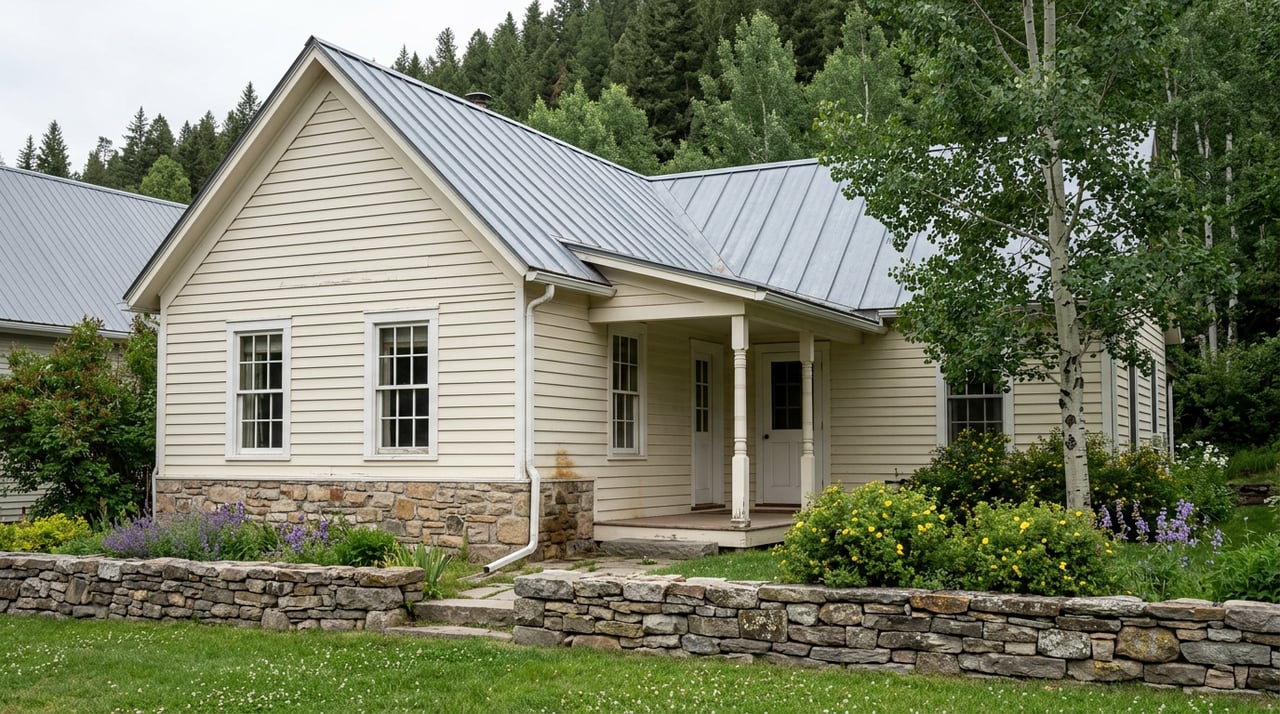
"Crested Butte will be more interesting in 25 to 50 years because of this work."
The Crested Butte News quoted Mayor Ian Billick describing the town's first-ever Historic Preservation Plan after the council approved it in December 2024. He meant it as a compliment. For a buyer touring homes in town right now, it also raises a practical question. The plan he's talking about is still being written into the zoning code as of this summer, and it will sort every property in Crested Butte into one of three buckets, each with a different answer to the question that actually matters when you're standing in a listing: what am I allowed to do with this house?
Two homes a block apart, same square footage, same asking price, can have completely different futures. One might be nearly impossible to tear down and rebuild. The other might have real flexibility for an addition or a redesign. The difference isn't on the listing sheet. It's on a map the town is still drawing.
The Colorado Encyclopedia says that the entire town of Crested Butte was designated a historic district in 1972. Under the old rules, that meant townwide review no matter where you lived. The new Historic Preservation Plan changes the shape of that protection rather than removing it, and it does so by sorting the town's 1,051 properties into three groups.
The first is the historic core itself, the Coal Mining Period of Significance, covering buildings from 1880 to 1952. Town planner Jessie Earley told the council that roughly 372 properties sit within this local historic district boundary, now drawn as a tighter buffer around the National Historic District rather than stretched across the whole town. If your future home falls here, expect the most restrictive demolition rules in town, because protecting this core is the entire point of the plan.
The second bucket is brand new: an Early Recreation Era Period of Significance for buildings from 1961 to 1984, the ski-town boom years. About 172 properties are candidates for this designation. The town spent 2025 surveying these buildings to determine which ones actually contribute to that architectural story and which don't. If your home lands in this group, it will face similar demolition protections to the mining-era core, just for a different reason: the town wants to hold onto its early ski-era buildings the same way it holds onto its mining-era ones.
The third bucket is the largest: about 507 properties that fall outside both periods of significance. These homes still have to respect the town's overall standards for mass, scale, and form, but they gain real design flexibility that the other two groups don't get. Councilmember Gabi Prochaska, who sat on the plan's subcommittee, was blunt about the tradeoff at the December 2024 meeting: tighter protection for the buildings that define Crested Butte's two historic eras, more creative freedom for everyone else.
Here's the part that makes this more than a filing-cabinet detail. The plan itself was approved in December 2024, but the rules that translate it into actual permitting decisions are being written right now, in real time, through 2026.
The town's companion zoning and subdivision code rewrite got an unofficial thumbs-up from council on June 15, 2026, and was headed to the Board of Zoning and Architectural Review for comment before a formal council vote. That timeline tracks with what community development director Mel Yemma told the Crested Butte News that same month: the zoning code could be adopted as soon as July, but the Design Standards, the document that will actually spell out which materials, heights, and styles are allowed inside each of the three zones, won't come back to council until December 2026.
That gap matters for anyone closing on a Crested Butte property between now and the end of the year. The zoning code tells you what can be built where. The design standards tell you what it has to look like once you build it. Right now, the first piece is close to final and the second piece is still months out. If you're planning a remodel that depends on exactly how flexible the "outside both periods" category turns out to be in practice, you're planning against a document that doesn't exist yet.
| Category | Approximate Properties | What It Means for Renovation |
|---|---|---|
| Coal Mining POS (1880-1952) | ~372 | Tightest demolition restrictions, core historic protection |
| Early Recreation POS (1961-1984) | ~172, under survey | Similar demolition protections once finalized |
| Outside both periods | ~507 | More design and material flexibility, still bound by town mass and scale rules |
There's a detail in the town's zoning documents that's easy to miss but worth knowing if you're selling a property with an old shed, garage, or carriage house on it. The Town of Crested Butte's B3 Zone Fact Sheet says the town will create a historic building stabilization and maintenance incentive program in 2026, aimed specifically at helping owners rehabilitate historic outbuildings and potentially convert them into accessory dwelling units or small-scale commercial space. If your property includes a contributing outbuilding, that's not dead weight on the appraisal. It's a feature the town is actively trying to make easier to use, not harder.
If you're touring homes in Crested Butte this fall, the practical move is simple: ask which of the three buckets the property falls into before you fall in love with a renovation plan. The town's Historic Preservation Plan page outlines the framework, and the community development department, currently led by Mel Yemma with planning support from Jessie Earley, can tell you where a specific parcel sits as the survey work firms up. For a property that might fall in the 172-parcel Early Recreation group, that answer may still be moving through review, which is exactly why it belongs in your due diligence conversation rather than an assumption.
This isn't a reason to avoid buying in town. It's a reason to ask the right question at the right time, the same way you'd ask about a septic system or a water right anywhere else in the valley. Crested Butte's small-town character is precisely what draws people here, and the town is trying to protect that character while allowing more flexibility for properties outside those historic periods. The Crested Butte News reported that councilmembers called the overall plan a "sea change." For a buyer, the practical version of that phrase is simpler: know your zone before you sign.
How do I find out which preservation category my potential home falls into? The town's community development department maintains the property survey data. Ask directly, or ask your agent to confirm before you write an offer that assumes a specific renovation scope.
Does this affect homes outside Crested Butte town limits? For homes outside Crested Butte, check with the local jurisdiction about its review process.
When will the rules actually be final? The zoning code was on track for adoption around July 2026. The Design Standards, which govern the specific materials and styles allowed in each zone, aren't expected back before council until December 2026. Until both pieces are in place, treat any renovation plan for a property in the two historic periods as provisional.
If you're weighing a purchase in Crested Butte and want a straight answer about where a specific address falls in this process, that's exactly the kind of local groundwork Gary Huresky and Hillary Spear do before you ever write an offer. Request a free home valuation and we'll walk you through what a property's zone actually means for your plans.
This article is general information, not legal, tax or financial advice. Consult a qualified professional about your situation.
Stay up to date on the latest real estate trends.

Bringing buyers and sellers together for 25 years