What You're Actually Buying When You Buy the Taylor River
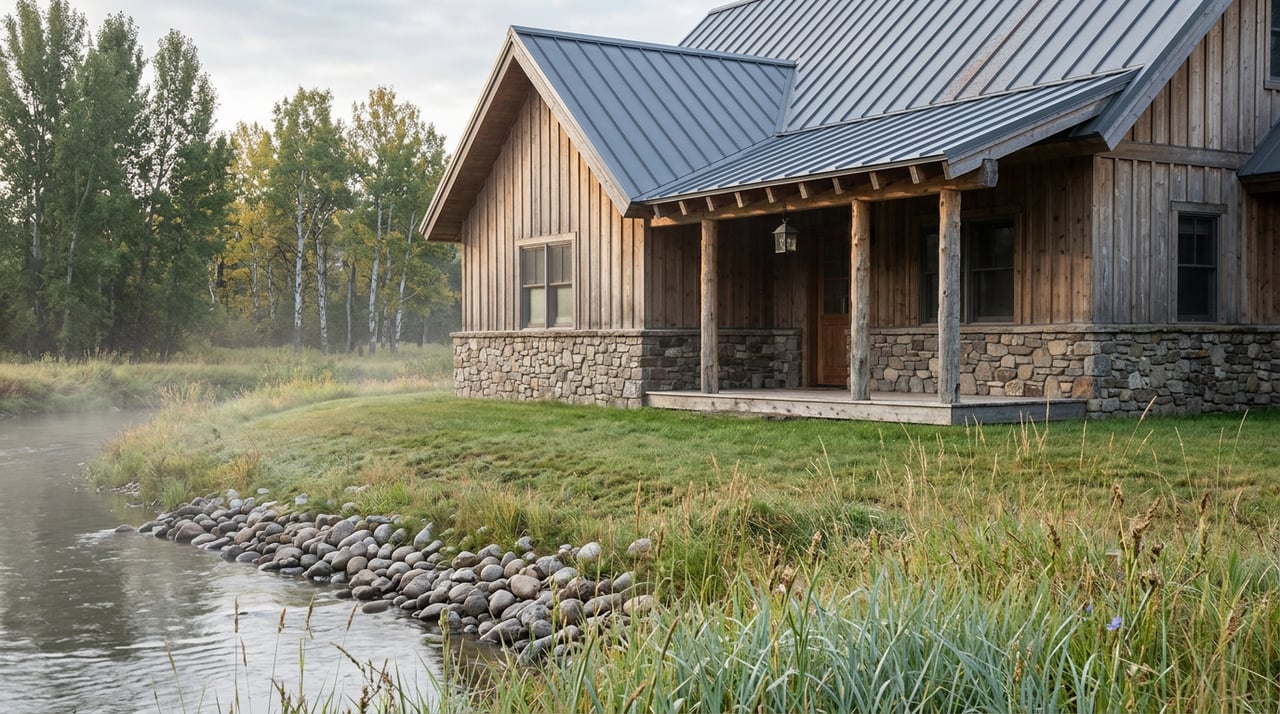
For decades, landowners along stretches of the Taylor River have strung cables across the water. Not to catch fish. To stop other people's boats from floating through.
That detail sat in a Colorado Sun investigation published this spring, and it is the single fact that should reframe how anyone shops for riverfront property in Almont. The cables exist because Colorado law does not let a landowner close the surface of the river to the public, even when that landowner owns every foot of the bed and both banks beneath it. So some owners have improvised a physical barrier instead of a legal one. That gap between what people assume riverfront ownership means and what Colorado law actually grants it is worth understanding before you write an offer on anything along the Taylor, the East, or the Gunnison where they braid together at Almont.
Almont's riverfront inventory is small enough that a single closing can swing the whole picture. As of July 2026, the median list price for homes in Almont sat at $1.99 million, with properties spending a median of 205 days on market and price per square foot down 8 percent from a year earlier. Read that as a snapshot of a handful of large, high-end properties changing hands slowly, not as a signal that river-adjacent land is losing appeal. A 35-acre riverfront homesite currently listed within the Wilder on the Taylor development, offering more than two miles of private frontage on what's marketed as a Gold Medal trout fishery, is the kind of listing that can single-handedly set the neighborhood median. Almont doesn't behave like a typical residential market with dozens of comparable sales. It behaves like a handful of trophy parcels, each priced against what river frontage is worth elsewhere in Colorado, which turns out to be a fast-moving number.
A Common Sense Institute analysis cited in that same Colorado Sun reporting found that land along the Elk and Yampa rivers climbed from roughly $1 million to $4.5 million per mile over four years. That is the scarcity math buyers are pricing into Almont land right now: private, floatable river frontage anywhere in Colorado is becoming more valuable faster than almost any other input into a rural property's price. The question this piece answers is what that frontage legally includes, because the answer surprises most buyers who assume "riverfront" means the same thing as "private lake."
Colorado's rule is commonly summarized as "float, don't touch." It traces back to a case known as the Emmert ruling and a state attorney general memo that river advocates consider unenforceable in practice. The practical effect is this: a landowner who holds title to a riverbed can pursue trespassing charges against someone who steps out of a boat, wades, or anchors on that stretch. That same landowner generally cannot stop a raft, kayak, or drift boat from floating across the surface of the water as it passes through, because the water itself is treated differently from the ground beneath it.
That is the entire reason the cables exist. A physical barrier is one of the few tools an owner has to actually stop boat traffic, since the law itself does not give them that power over the surface. Three Rivers Outfitting, based right at the confluence in Almont, runs float trips down the Taylor and the Gunnison as part of its regular guided business, a business that only works because the public retains the right to float through private reaches of exactly the kind of water that riverfront buyers are purchasing next to.
If you are weighing a riverfront purchase in Almont, the timing of the current legal landscape matters more than it might in a slower-moving policy area. Colorado's 2026 legislative session ran its full 120 days and ended May 13 without a single bill introduced to change the float-don't-touch status quo, according to reporting that ran across several Colorado outlets including the Aspen Times and Summit Daily. That is not the same as the issue being resolved.
Two camps of river advocates spent the year working the fight from different angles. One, organized as the River Recreation Alliance and backed by groups including American Whitewater, pushed specifically for a narrow right to float, one that would have let rafters make brief contact with a riverbed or bank only for safety reasons like scouting a rapid or portaging around an obstacle. American Whitewater's Hattie Johnson, who works on river restoration for the group's Southern Rockies program, has said publicly that her side believes the "imbalance of power" at the Capitol favors landowners because opponents can outspend advocates on lobbyists and attorneys. On the other side, the Colorado Water Conservation Alliance organized landowners to defend the current system, and the Western Landowners Alliance's Lesli Allison has argued that most relationships between landowners and river users are already positive without legislative intervention. Colorado state Senator Dylan Roberts, who took part in an earlier river trip meant to build consensus between the two camps, said the compromise both sides were hoping for never materialized.
Neither side treated this as closed. The advocacy groups pushing for expanded access have said openly they plan to keep working toward legislation in a future session. For a buyer thinking in five or ten year terms about a riverfront parcel in Almont, that means the rules governing who can be on the water next to your property are not fixed. They are paused.
| You likely own | You likely don't control |
|---|---|
| The streambed and both banks within your property lines | Boats floating across the surface of the water |
| The right to fence, restore, or landscape the banks you hold title to | Whether a rafting outfitter runs a scheduled trip past your frontage |
| Standing to pursue trespassing claims against anyone who steps out of a boat onto your bed or bank | The water level or release schedule, which upstream reservoir operations largely determine |
| Water rights tied to the property, which are a separate legal question from bed and bank ownership | Any future change to floating rights if the legislature eventually acts |
This is the table every riverfront buyer in Almont should have in front of them before making an offer, because listing photography and marketing copy rarely draw this line. A private stretch of Gold Medal water reads as exclusive. Legally, it is exclusive on land and ambiguous on the water itself.
A few questions are worth raising with your agent or attorney on any Almont riverfront listing, and they go beyond the usual title search:
None of these questions will change what the law currently allows. They will tell you whether the specific parcel you're buying has already been a flashpoint, which matters more in a legal environment that both sides describe as temporary.
Does the float-don't-touch rule apply to the East River and Gunnison River sections near Almont too, or just the Taylor? The doctrine is a statewide legal standard, not specific to one river. It applies anywhere a boater floats across a privately owned streambed in Colorado, which includes the East River and Gunnison River reaches around Almont's confluence just as much as the Taylor.
If I buy riverfront property here, can I still stop someone from fishing from the bank on my side? Bank and bed ownership generally does give you standing to restrict wading, anchoring, and bank access, which is the piece of the doctrine landowners retain. What you cannot do under current law is stop a boat from floating across the water itself as it passes through.
Is this likely to change soon? Nothing moved through the legislature in the 2026 session, and no bill is currently scheduled. Advocacy groups on the floating-rights side have said they intend to keep pursuing legislation, so this is a live issue rather than a settled one, and it's worth revisiting before any future closing.
Riverfront land in Almont carries real scarcity value, and that value is likely to keep climbing given what's happened to comparable frontage elsewhere in the state. The point isn't to avoid it. It's to buy it with an accurate picture of what the deed actually controls. If you're weighing a property along the Taylor, the East, or the Gunnison and want a straight read on what a specific parcel's water rights and access history actually look like, Gary Huresky and Hillary Spear at Crested Butte Homes can walk the title with you before you write an offer. Request a Free Home Valuation to start that conversation.
Stay up to date on the latest real estate trends.

Bringing buyers and sellers together for 25 years